
Introduction: Negotiation Approaches in Luxury Thousand Islands Markets
The Thousand Islands archipelago—stretching along the St. Lawrence River near Clayton, Alexandria Bay, and Wellesley Island—presents a rare blend of legacy estates, private islands, and blue-chip shoreline properties. Many of these residences are one-of-a-kind: century cottages modernized for four seasons, compounds with deep-water docks, and boathouses engineered for Seaway traffic wake and winter ice. In such a market, deal outcomes often hinge less on list price and more on the strategy behind the offer. Choosing between aggressive and collaborative approaches to thousand islands real estate negotiation can change timelines, risk exposure, and the final net for both sides.
Because trophy properties have few true comps and idiosyncratic attributes—dock permits, intake water systems, crib or steel docks, boathouse condition, and riparian boundaries—negotiation style must account for technical due diligence as much as price psychology. Importantly, cross-border dynamics add nuance: some buyers or sellers are Canadian, jumbo financing standards vary, and currency fluctuations can shift perceived value during escrow.
As a boutique luxury team focused on extraordinary homes and waterfront in the Finger Lakes and Western New York, the Deanna Nissen Real Estate Team regularly advises high-net-worth clients on negotiation frameworks that also translate to the Thousand Islands. Whether you are securing a singular island compound or listing a storied riverfront estate, aligning strategy to property type, seller profile, and seasonal timing is the difference between winning on terms versus merely winning on price.
Overview of Aggressive Negotiation Strategies
Aggressive negotiation prioritizes leverage, speed, and certainty for one side. The buyer or seller asserts a clear, firm position and uses pressure to compel acceptance. In high-end waterfront transactions, aggressive does not mean reckless; it means engineered intensity with calculated risk.
Core aggressive tactics include:
- Anchoring with a bold initial position: For buyers, that could be a decisive, time-limited offer with minimal contingencies; for sellers, a premium list price supported by a strict showing and offer schedule.
- Deadlines and short fuses: 12–24 hour response windows, weekend cutoffs to control momentum, and immediate deposit due upon acceptance (sometimes non-refundable after short diligence).
- Contingency compression: Waiving appraisal or inspection, using hard money day one, or setting five-business-day due diligence where typical waterfront cadence might be 10–15 days.
- “As-is” posture with price: Buyers present a compelling number and agree to take the property with minimal repairs; sellers insist on selling as-is and filter only buyers with proof of funds and demonstrated river property experience.
- Back-up positioning: When outbid, filing an aggressive back-up contract at strong terms to capture the deal if the first buyer falters on appraisal, insurance, or permits.
In elite waterfront markets, an aggressive stance can discourage casual competitors, keep the story of the property from circulating, and capitalize on latent seller urgency—perhaps related to vessel logistics, estate timing, or cross-border tax planning. The downside: misreading a pride-of-ownership seller or a legacy family estate can trigger a stalemate or shut doors in a tight-knit community.
Overview of Collaborative Negotiation Strategies
Collaborative negotiation seeks to expand the solution set by making trades that matter to each side. Rather than a binary fight over price, both parties share priorities and structure terms that create surplus value. In luxury waterfront deals—where timing, access, and specialized due diligence are complex—collaboration often produces better risk-adjusted outcomes.
Common collaborative moves include:
- Information exchange with intent: Buyer reveals non-price priorities (e.g., spring occupancy after ice-out, boathouse safety inspection) while asking the seller what matters (close date, tax year, exclusion of heirloom fixtures, rent-back).
- Value-for-value trades: Price improvements in exchange for furnishings, boats, or lifts; seller credits tied to seasonal verification of water systems; or occupancy arrangements until docks are reinstalled.
- Transparency around specialized risks: Pre-offer property-specific inspections (diver for crib dock, engineer for seawall, environmental review of fuel tanks) to narrow uncertainty and reduce re-trade later.
- Joint problem-solving with third parties: Coordinating with the NYS DEC, the U.S. Army Corps of Engineers, or local municipalities on dock permits, shoreline work, and boathouse compliance before closing.
- Relationship stewardship: Maintaining professional rapport that keeps communication channels open when inevitable hurdles arise—insurance quotes, flood risk questions, or cross-border wire timing.
Collaboration does not mean capitulation. It is a disciplined process that converts unknowns into solvable terms, often unlocking price flexibility once risk is managed.
Comparison: Initial Offer Positioning and Pricing Psychology
In a region where two island estates can differ by a boathouse grandfathering status, 200 feet of shoreline, or seaway wake exposure, the first offer signals sophistication as much as it communicates price. Pricing psychology in thousand islands real estate negotiation leans heavily on credibility.
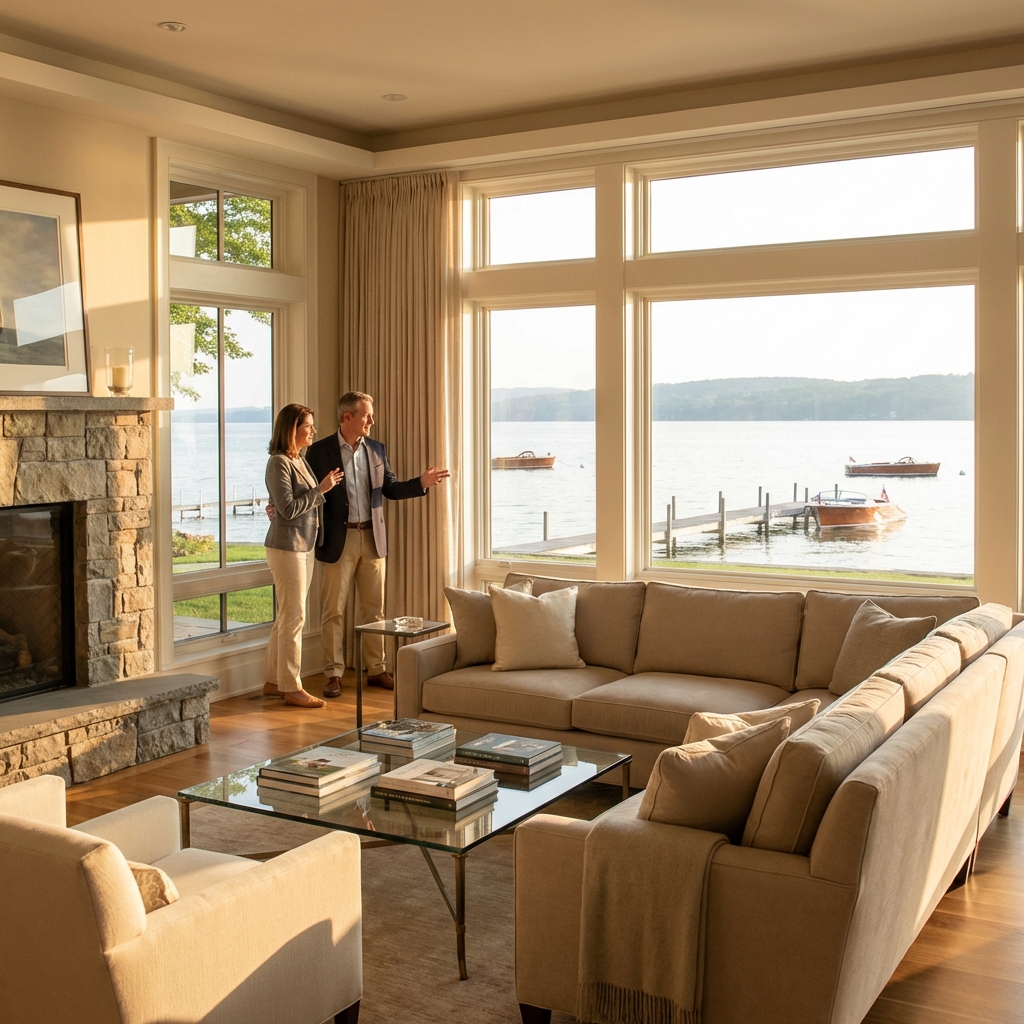
Aggressive positioning:
- Sharp anchor, short fuse: A buyer might present a premium cash number with zero appraisal contingency and a 48-hour expiration. This can suppress a bidding war by forcing swift acceptance.
- “As-is” framing: The price bakes in anticipated repairs or modernization, with the buyer assuming those responsibilities post-close. This is potent when the seller values certainty over maximizing every dollar.
- Strategic precision: Using a non-round figure (e.g., $2,612,500 instead of $2.6M) implies granular valuation modeling and reduces the seller’s sense that there is an easy extra increment to extract.
Collaborative positioning:
- Justified premium for uniqueness: Buyers explain how features—deep-water docks, multi-slip boathouses, riparian clarity, and protected bays—warrant paying above standard comps. The rationale documents rarity, not just price.
- Lettered terms package: The offer clearly communicates optionality: “We can close before year-end at X price or post-ice-out at X+Y, inclusive of a seasonal occupancy agreement.”
- Appraisal strategy disclosure: For financed purchases, buyers can preview an appraisal gap solution, such as a capped gap guarantee that protects the seller from a low appraisal shortfall.
On the sell side, precise pricing backed by waterfront comparables and feature premiums sets the tone. For example, in the Finger Lakes, premium estates such as the 2890 W Lake Road property demonstrate how boathouse quality, lake approach, and privacy create valuation tiers; similar logic applies in the Thousand Islands, where protected moorage or commercial-grade crib docks can command a significant delta. Sellers who publish a professional valuation with a narrative around those attributes strengthen their negotiating hand from day one.
Comparison: Inspection and Due Diligence Tactics
Waterfront due diligence diverges sharply from conventional suburban homes. Aggressive and collaborative playbooks handle that divergence differently.
Aggressive due diligence:
- Waiver or compression: Buyers might waive general inspections or limit them to five days, accepting known risks to outmaneuver competing offers. They could rely on private pre-offer walk-throughs with a contractor rather than formal inspections.
- Post-close assumption of repairs: The buyer prices-in visible dock or seawall issues and refuses repair credits later. This posture can quell seller anxiety about post-acceptance renegotiation.
- Limited scope: Focus on only the most material items (structural, boathouse safety, insurance viability), bypassing secondary items to avoid extending timelines.
Collaborative due diligence:
- Specialized waterfront inspections:
– Diver or structural review for crib or steel docks, ice damage, and tieback integrity – Seawall engineering assessment for erosion or wake exposure – Water quality and intake system evaluation (zebra mussel impact, winterization risk) – Septic dye test and capacity confirmation for larger gatherings – Boundary and riparian survey to confirm dock lines and littoral rights
- Seasonal verification: When inspections cannot be fully completed in winter, parties set escrow holdbacks tied to spring commissioning of water systems and dock reinstallation.
- Permit and compliance checks: Confirm existing permits for docks/boathouses and feasibility for future alterations with the NYS DEC and the U.S. Army Corps of Engineers before concluding negotiations, reducing uncertainty that suppresses price.
For sellers, pre-listing inspections and document prep—permits, surveys, boathouse plans, flood/insurance data—preempt late-stage friction. That transparency supports either strategy: it strengthens an aggressive ask and streamlines a collaborative path.
Comparison: Timeline and Contingency Management
Islands introduce logistics: boat-only access, winter freeze, Seaway shipping season noise, and service contractor availability. Timelines are negotiation levers.
Aggressive timeline management:
- Compressed closing: Cash buyers propose 15–21 day closes with immediate proof of funds and insurance pre-underwriting. Minimal contingencies deter competitors.
- Hard earnest money early: A portion of the deposit becomes non-refundable after a brief diligence window, demonstrating resolve.
- Tight contingency framework: Limited right to re-trade; “as-is” stipulation; appraisal waivers or substantial gap guarantees on jumbo loans.
Collaborative timeline management:
- Seasonal occupancy planning: If closing occurs in late fall, sellers might retain partial occupancy or storage rights over winter, with buyers receiving early access for planning and vendor scheduling.
- Permit contingency: Closing is conditioned on verification of critical permits or feasibility for a desired dock or boathouse upgrade, with milestones and shared responsibility for submissions.
- Cross-border and currency sensitivity: For Canadian-involved transactions, parties structure longer rate-lock periods, hedge currency risk, or schedule closing to align with anticipated FX stability. Communication with cross-border legal counsel is embedded in the timeline.
Beyond mainline contingencies, luxury buyers often add insurance, survey, and contractor-review contingencies specific to waterfront. In negotiation, the key is clarity: identify deal-breakers, set decision dates, and define remedies (credit, holdback, or termination) if a checkpoint fails.
Pros and Cons of Aggressive Negotiation in Thousand Islands Sales
Pros:
- Speed as a moat: A forceful, clean offer can win before competitors mobilize inspections, currency conversions, or board approvals for associations.
- Reduced post-acceptance drift: Narrow contingencies mean fewer opportunities for the deal to unravel due to appraisals or contractor schedules in peak season.
- Stronger price defense: On the sell side, a firm posture plus limited concessions can preserve net proceeds, especially when the property is truly irreplaceable.
Cons:
- Higher risk exposure: Waiving inspections or appraisals on a complex waterfront asset concentrates risk with the aggressive party, potentially uncovering costly surprises later (seawall failure, boundary disputes).
- Community optics: The Thousand Islands market can be relational. A confrontational tone may sour a seller who prioritizes stewardship or legacy fit for their home.
- Appraisal and financing pitfalls: Jumbo loans with tight timelines and low-appraisal risk can derail a hard stance unless a robust gap guarantee is in place.
Aggressive strategies reward decisive buyers and sellers who correctly read urgency, uniqueness, and competition. They punish misreads.
Pros and Cons of Collaborative Negotiation for Luxury Properties
Pros:
- Value creation through trades: Aligning on occupancy, personal property, dock logistics, and seasonal holdbacks can bridge price gaps without eroding goodwill.
- Risk containment: Thorough, shared diligence reduces unknowns, which supports both higher prices and smoother closings.
- Reputation and relationships: A respectful approach keeps the door open should the first path falter—crucial in communities where off-market opportunities circulate among trusted circles.
Cons:
- Potential to lose to a blunt competitor: While you document and negotiate finer points, a simple, higher, contingency-light offer may leapfrog the line.
- Complexity can invite fatigue: Too many moving parts can exhaust parties, leading to retrenchment or deal fatigue.
- Over-disclosure risk: Revealing too much about priorities can weaken your leverage if the other side reverts to a positional stance.
Collaboration works best when both sides appreciate the property’s complexity and recognize that certainty has monetary value.
When to Deploy Aggressive Strategies in High-End Markets
Consider an aggressive approach when:
- The listing is underpriced or mis-marketed: A crisp, premium, as-is offer can secure the home before re-pricing or broader exposure.
- Competition is imminent: Trophy island estates and turnkey riverfront compounds often queue multiple offers after a strong weekend of showings. A time-limited, contingency-light bid can preempt escalation chaos.
- Seller urgency is evident: Estate settlements, tax-year constraints, or immediate relocation plans can make certainty paramount.
- You hold clear leverage: Cash with verified proof of funds, experienced waterfront counsel, and vendor relationships that can mobilize post-close repairs quickly.
- Off-market or whisper scenarios: When discretion is key, simplicity wins. A single, well-documented offer with confidentiality provisions can clinch the deal.
On the sell side, go aggressive when your asset is singular—protected moorage, grandfathered multi-slip boathouse, and extraordinary privacy—backed by a fresh survey, permits, and vendor records. Enforce strict showing windows, require buyer qualification packages, and limit concessions.
When Collaborative Approaches Drive Better Outcomes
Lean collaborative when:
- The asset is heirloom caliber: Long-held estates with sentimental value respond better to buyers who respect transition logistics, furnishings curation, and legacy stewardship.
- Technical unknowns are material: Dock integrity, seawall longevity, or riparian boundaries require engineering and permitting clarity that both sides must navigate.
- Cross-border complexity is present: Canadian buyers or sellers introduce financing, tax, and currency variables that benefit from coordination, not brinkmanship.
- Seasonal constraints limit diligence: In winter, shared inspections and escrow-based solutions maintain momentum without forcing risky waivers.
- Multiple decision-makers are involved: Family trusts, associations, or corporate sellers with board approvals move smoother under a transparent, milestone-driven process.
Collaborative methods can also lift net pricing. Sellers often accept slightly lower sticker price in exchange for low-friction terms; conversely, buyers may pay more when risk is quantifiably contained.
Recommendations: Choosing Your Negotiation Strategy for Waterfront Estates
Selecting your approach is not binary. Build a playbook aligned to property characteristics, market tempo, and your risk tolerance.
1) Diagnose market conditions
- Inventory and absorption: If similar island estates have 2–3 active buyers per listing, prepare an aggressive option. If luxury days-on-market are stretching, design a collaborative, detail-rich path that extracts favorable concessions.
- Pricing signals: Watch for underexposed listings, off-season releases, or suboptimal photography—each suggests room for an assertive, early strike.

2) Profile the seller
- Motivation: Estate liquidation, year-end tax planning, and out-of-state relocation often favor speed and certainty.
- Tenure and tone: Long-term owners or historically maintained compounds tend to value respectful processes and legacy-minded buyers.
3) Calibrate risk tolerance
- Inspection appetite: Decide which inspections are non-negotiable (e.g., dock/seawall) versus deferrable to a post-close plan with escrow protections.
- Financing exposure: If financing is required, line up jumbo pre-underwriting and build an appraisal gap strategy that protects both sides.
4) Architect two offers before you write one
- Aggressive version: Premium price, minimal contingencies, tight deadlines, short diligence, large earnest deposit (portion going hard after five days), clean personal property terms.
- Collaborative version: Moderated price with robust diligence, seasonal holdbacks, permit feasibility contingency, occupancy flexibility, and a clearly explained appraisal or currency-hedging plan.
5) Use precision communications
- Offer narrative: Attach a rationale letter summarizing valuation logic, timeline, and risk-management provisions. It reads as professional, not emotional, and improves acceptance odds.
- Vendor readiness: Share a roster of river-experienced inspectors, engineers, and insurers, demonstrating that you can execute.
6) Leverage comparables with nuance
- Focus on functional equivalence: Protected deep-water access, boathouse capacity, privacy indices, and shoreline composition matter more than raw square footage.
- Draw from broader waterfront markets for methodology: While each body of water is unique, valuation frameworks used in premium Finger Lakes listings—such as 2890 W Lake Road—illustrate how dock quality, approach, and view corridors translate into premiums. Apply the same rigor in the Thousand Islands with local data overlays.
7) Plan for post-acceptance discipline
- Set weekly checkpoints: Insurance quotes, survey status, permit research, appraisal scheduling, and vendor bids.
- Pre-wire solutions: Agree in advance on outcomes if a contingency fails—credit, limited extension, or termination—avoiding last-minute brinkmanship.
For luxury buyer representation strategies, clarity about must-haves, a documented escalation path, and professional rapport with listing brokers are as valuable as cash. Sellers, meanwhile, should pair pricing confidence with pre-listing diligence to minimize re-trade risk and amplify the benefits of either approach.
Conclusion: Balancing Strategy with Market Conditions and Property Value
Thousand Islands luxury deals are rarely interchangeable. Every shoreline, dock configuration, and access nuance changes the calculus. Aggressive negotiation wins when speed and certainty eclipse complexity; collaborative negotiation excels when technical diligence and human priorities shape value. The most successful thousand islands real estate negotiation strategies blend both—leading with a posture suited to the moment, then adjusting as new information emerges.
High-end waterfront home offers should never be copy-paste. They should reflect seasonality, permit landscape, cross-border variables, and the emotional context of legacy estates. Whether you are pursuing a protected-bay island retreat or listing a multi-slip boathouse compound, design your approach before the first showing, prepare two paths to acceptance, and choreograph due diligence with the same precision as price.
The Deanna Nissen Real Estate Team operates on a boutique, quality-over-quantity model, representing luxury buyers and sellers across Western New York waterfront markets and applying those best practices to transactions like those in the Thousand Islands. If you calibrate strategy to property uniqueness, communicate value with evidence, and manage risk as diligently as price, you will negotiate not just a deal—but the right deal.
Frequently Asked Questions (FAQ)
How do aggressive and collaborative strategies differ in Thousand Islands real estate negotiation?
Aggressive tactics prioritize leverage—low anchors, strict deadlines, and trimmed contingencies—which can secure discounts on stale listings but risk alienating sellers when inventory is scarce. Collaborative approaches emphasize data-backed pricing, transparent priorities, and flexible terms (e.g., rent-backs, seasonal closings, or including furnishings), often unlocking concessions that matter without blowing up the deal.
When should I choose an aggressive approach for a luxury waterfront purchase?
Use it when days on market are high, pricing is out of line with recent sales, it’s off-season, or the seller has a hard timeline. Lead with clear comps, compress contingency periods, and target concessions tied to costly findings from inspections (seawall, boathouse, septic). Avoid this stance in multi-offer situations for irreplaceable shoreline estates.
What due diligence factors most impact negotiation terms on Thousand Islands waterfront homes?
Verify dock/boathouse permits and riparian rights, water depth and access, shoreline stabilization or seawall condition, and well/septic performance. Check flood and ice damage history, insurance costs, and island logistics for utilities and winter access. Use these findings to negotiate price changes, escrow holdbacks for marine work, or timelines aligned with contractor availability and boating season.