
Introduction: The Hidden Market of Luxury Lakefront Properties
Across New York’s lake country, a surprising share of the most coveted shorelines change hands quietly. Beyond public portals and splashy marketing, there exists a discreet ecosystem where premium properties are previewed by a select circle, toured by appointment, and sold before the broader market ever knows they were available. For buyers searching for off-market lakefront homes New York, understanding how and why these properties move under the radar is the first step toward finding them.
The drivers are clear. Waterfront estates are scarce by nature—shorelines can’t be expanded—and the owners of exceptional homes often prefer confidentiality. Whether the residence includes a historic boathouse, a deep-water dock accommodating larger craft, or a modern glass pavilion set above a private cove, the defining elements of waterfront luxury are best preserved with careful, individualized exposure. High-net-worth buyers, meanwhile, value a streamlined process that protects their privacy and time.
The Deanna Nissen Real Estate Team operates within this premium segment across the Finger Lakes and Western New York. As a boutique firm, the team provides calibrated guidance for navigating both visible listings and the quieter arena of private introductions and unlisted opportunities. If your goal is to secure a best-in-class lakefront property—without unnecessary competition—learning the mechanics, advantages, and access points of the hidden market will sharpen your strategy from day one.
Understanding MLS Listings: How Traditional Real Estate Works
Most homes appear on the Multiple Listing Service (MLS), a cooperative database that powers listing visibility across brokerage sites and public platforms. When a property is entered into MLS, it immediately syndicates to consumer-facing portals, alerts buyer agents through automated searches, and invites broad market participation. This framework is designed to maximize exposure, accelerate showings, and surface competing offers, often within a matter of days.
For conventional homes, MLS performs well. It standardizes property data, ensures cooperating broker compensation, and records critical market metrics like days on market and price changes. Appraisers rely on MLS sales for comparable data; so do lenders, attorneys, and tax assessors. Buyers benefit from transparency: photo galleries, floor plans, disclosures, and showing windows allow for quick assessments and timely decisions.
In the luxury segment, however, these same benefits can introduce friction. Significant public exposure may attract unqualified showings, create headlines that ripple through close-knit communities, and generate a digital footprint that persists long after a sale. With waterfront estates, there are also security considerations—dock access, boathouse storage, and views into private lakefront spaces—that sellers prefer to keep controlled.
This is not to say that premier properties never list publicly. Many do—and perform well—when the strategy aligns with market timing and seller objectives. Yet a notable subset of high-value waterfront transactions in New York occurs outside conventional channels. Those properties are marketed selectively, shared agent-to-agent, or introduced through trusted networks to buyers positioned to move decisively.
The Off-Market Advantage: Why Luxury Sellers Choose Privacy
Off-market real estate in New York is not a loophole; it is an intentional strategy. Luxury sellers opt for private pathways because discretion can protect value. A quietly shopped property avoids the digital paper trail of price changes or extended days on market, both of which can invite unnecessary negotiation pressure. For estates that are owner-occupied or actively enjoyed by family and guests, limited showings also minimize disruption.
Common reasons luxury sellers choose the private route include:
- Confidentiality: High-profile or privacy-conscious owners avoid broad exposure of interiors, art collections, and lakefront infrastructure.
- Controlled access: Curated showings for known, qualified buyers protect security and preserve the home’s daily rhythm.
- Testing price tolerance: Private outreach allows a seller to gauge interest and feedback without committing to an MLS history.
- Seasonal flexibility: Many lakefront owners prefer quiet marketing during fall or winter and a public launch in spring, if necessary.
- Asset sensitivity: Properties with bespoke architecture, rare shoreline attributes, or complex amenities may be better understood through guided storytelling than public listings.

For buyers, the off-market channel offers the chance to see homes before competition intensifies. But access requires preparation. Sellers will expect proof of funds or lender preapproval, respect for confidentiality, and a timeline that aligns with their plans. They also want to know their buyer understands the nuances of waterfront ownership—permits, shoreline setbacks, and lake-level management—which is where specialized representation adds real value.
The net result is a better-aligned negotiation. With fewer parties involved, discussions can address what truly matters to both sides: transition dates around summer usage, inclusion of watercraft and lifts, and plans for dock or boathouse improvements that may require permitting.
Waterfront Properties in the Finger Lakes: Market Dynamics
The Finger Lakes region is composed of eleven long, glacial lakes, each with distinct characteristics that shape demand and value. Skaneateles and Canandaigua are often cited for their crystal-clear waters, walkable villages, and refined amenities. Keuka’s signature Y-shape offers varied exposures and high recreational appeal. Seneca and Cayuga bring broader shorelines and proximity to wine trails and dining, while Owasco, Honeoye, and Conesus provide quieter communities with strong local traditions. These micro-markets behave differently, even week to week in peak season.
What unifies them is scarcity. Shoreline is finite, zoning can be restrictive, and many premier stretches are held for generations. When a property trades, it may do so off-market to keep disturbances minimal, or it may appear briefly and receive immediate attention from buyers who have been monitoring that specific cove or boulevard for years. In Western New York, select lakefront corridors also see private introductions as owners and neighbors value continuity and stewardship.
Buyers evaluating private waterfront properties in the Finger Lakes should understand a few consistent dynamics:
- North vs. south ends: Lake orientation and depth influence water temperature, ice coverage, and prevailing winds, which can affect seasonality and maintenance.
- Slope and access: Steeper banks may provide views but require stairs or trams; gentler slopes are prized for multi-generational use.
- Dockage and depth: Deep-water frontage supports larger boats; shallower, sandy entries are ideal for swimming and young families.
- Municipal layers: Setbacks, septic updates, and shoreline improvements may be governed by a mix of town, county, and state rules.
Within this tapestry, certain addresses are shorthand for blue-chip value. Along Skaneateles Lake, stretches of West Lake Road command consistent interest; properties like 2890 W Lake Road, Skaneateles illustrate the appeal of clear water, premier siting, and quality construction. On Canandaigua, West Lake Boulevard is similarly recognized for prestige and proximity to village amenities; West Lake Boulevard, Canandaigua provides a useful reference point for this corridor’s character.
The implications are clear: when an unlisted property surfaces on a marquee road or favored cove, prepared buyers must move quickly and thoughtfully, guided by advisors who know the shoreline house by house.
How to Access Off-Market Lakefront Homes
Because off-market opportunities rarely announce themselves, access depends on proactive positioning. Buyers interested in exclusive lakefront listings in western New York can widen their aperture through several practical steps:
- Engage a boutique team with a waterfront track record. Agents who work the lakes daily are often first to hear of upcoming transitions—from casual conversations with neighbors to quiet signals from attorneys, wealth advisors, or property managers.
- Demonstrate financial readiness. Proof of funds or lender preapproval establishes credibility. Sellers who value privacy favor buyers who can execute smoothly without extended contingencies.
- Clarify criteria early. Lake preference, frontage type (level vs. elevated), dockage requirements, primary vs. seasonal use, and rental tolerance will focus outreach and avoid wasted showings.
- Opt into private client lists. Many luxury agents maintain curated rosters for whisper listings. These alerts are not public; they depend on relationships and a shared understanding of timing.
- Consider strategic letters of interest. Thoughtful, respectful notes to owners in a desired micro-location—delivered via an agent—sometimes surface conversations that would not occur otherwise.
- Leverage community touchpoints. Yacht clubs, lake associations, and local contractors often know of homes that may change hands in the next season or two. Discretion is essential; introductions should flow through trusted professionals.
In parallel, be ready for a different showing cadence. Off-market real estate New York is frequently toured outside of standard windows, sometimes while a family is in residence. Photography may be limited, and floor plans or surveys may require a non-disclosure agreement. A seasoned waterfront agent will coordinate access, gather permits and historical documentation, and verify that what you see on the shoreline aligns with town records.
Above all, expect the search to be both targeted and patient. The right property often emerges through persistent, respectful presence in the market, combined with decisive action when the right fit appears.

The Value of Professional Networks in Luxury Real Estate
In the luxury space, market knowledge and professional networks are inseparable. The best information often flows before a listing is assembled: a builder finishing a lakefront project, an architect aware of an owner’s next design, or an estate attorney preparing a quiet transition. A connected agent synthesizes these signals and brings real opportunities to the right clients at the right moment.
Effective networks operate on multiple levels:
- Local expertise: Dock installers, marine engineers, surveyors, septic designers, and shoreline landscapers provide early visibility into property needs and potential. Their insight can turn a borderline option into a standout—or save you from costly surprises.
- Agent-to-agent collaboration: Boutique professionals across the Finger Lakes and Western New York exchange private notes on unlisted luxury properties, often introducing buyers to homes that will never reach public channels.
- Feeder markets: Executives and families relocating from New York City, Boston, Philadelphia, Toronto, and beyond commonly target the Finger Lakes for lakefront retreats. Relationships with relocation advisors and wealth managers can open introductions on both the buy and sell sides.
- Transaction allies: Strong ties with lenders experienced in complex waterfront appraisals, title companies adept at tracing riparian rights, and insurance brokers versed in flood and wind coverage keep the deal moving once an opportunity is identified.
The Deanna Nissen Real Estate Team combines this network effect with a boutique, quality-over-quantity approach. That means fewer clients at a time, deeper engagement with each search, and stronger alignment with what matters most to you—privacy, orientation, water depth, architectural style, or proximity to a specific village. In a market where timing and discretion govern outcomes, those relationships are often the difference between hearing about a property and walking through it privately the next afternoon.
Comparing Buyer Experience: MLS vs. Off-Market Properties
The buyer journey diverges meaningfully depending on whether you pursue MLS listings or private estate sales on the waterfront. Understanding the contrasts helps you calibrate expectations and prepare your process.
What typically characterizes an MLS-focused search:
- Abundant data: Full photo sets, 3D tours, floor plans, and public disclosures are common.
- Predictable scheduling: Open houses and showing blocks are standardized, often leading to crowded conditions.
- Competitive exposure: Multiple offers are likely on well-priced lakefront homes during peak season.
- Clear pricing anchors: Comparable sales are easier to assemble, aiding valuation and financing.
What defines an off-market search:
- Curated information: Photos and details may be limited until a confidentiality agreement is signed.
- Controlled showings: Private appointments minimize disruptions and favor qualified, serious buyers.
- Tailored negotiation: Terms may center on timing, discretion, and inclusions like docks, lifts, and furnishings.
- Valuation nuance: With fewer public comps, pricing relies on expert knowledge of micro-markets, adjustments for frontage quality, and recent quiet trades.
Both paths require diligence. On MLS properties, speed and preparation are vital to rise above the competition. On unlisted luxury properties, discretion, credibility, and a compelling offer structure often matter as much as price. Many successful searches blend the two—monitoring MLS closely while simultaneously cultivating off-market channels. An experienced agent will guide you on when to push publicly and when a quieter introduction makes better sense.
Key Considerations When Purchasing Waterfront Estates
Lakefront living adds layers to standard homeownership. From regulatory compliance to environmental dynamics, details along the shoreline require precise attention during due diligence. As you evaluate private waterfront properties in the Finger Lakes or other premium lakes in Western New York, consider the following:
- Shoreline rights and boundaries: Confirm riparian rights, mean high-water lines, and where property lines extend. Historic surveys may not reflect current lake levels or accreted land.
- Docks, hoists, and boathouses: Verify permits, dimensions, and allowable modifications with the municipality—and, where applicable, state environmental agencies. Some lakes have moratoria or strict guidelines on new structures.
- Erosion and stabilization: Assess existing bulkheads, stone revetments, or naturalized buffers. Review any Army Corps, DEC, or local approvals for prior shoreline work, and budget for maintenance or upgrades.
- Water depth and lake management: Understand seasonal level changes, ice conditions, and dredging history. Deep water can be essential for larger craft; sandy, shallow entries suit swimmers and paddle sports.
- Utilities and septic: Inspect well capacity and quality if not on municipal water. Septic systems near the lake may face upgrade requirements during transfer; consult design professionals familiar with watershed rules.
- Flood and insurance: Confirm FEMA flood zones, prior claims, and carrier availability. Wind and water coverage vary by property; specialty brokers can clarify true annual cost.
- Access and topography: Evaluate stairs, trams, or pathways to the shoreline, especially for multi-generational use. Winter access on steep drives can require four-wheel drive or heated surfaces.
- Structural elements: Boathouses and lake-level rooms merit careful inspection for moisture, freeze-thaw cycles, and compliance with setbacks or prior approvals.
- Use restrictions: Review short-term rental rules, HOA or lake association covenants, noise ordinances, and wake restrictions. These impact lifestyle and potential income strategies.
- Environmental context: Ask about algae blooms, invasive species management, and watershed initiatives. Healthy lake systems protect recreational value and long-term appreciation.
- Views and privacy: Consider tree management, sightlines from neighboring properties, and lighting restrictions that preserve dark-sky character around certain lakes.
- Inclusions and transition: Boats, lifts, and specialized furnishings may be negotiated; confirm serial numbers, maintenance records, and any leased equipment.
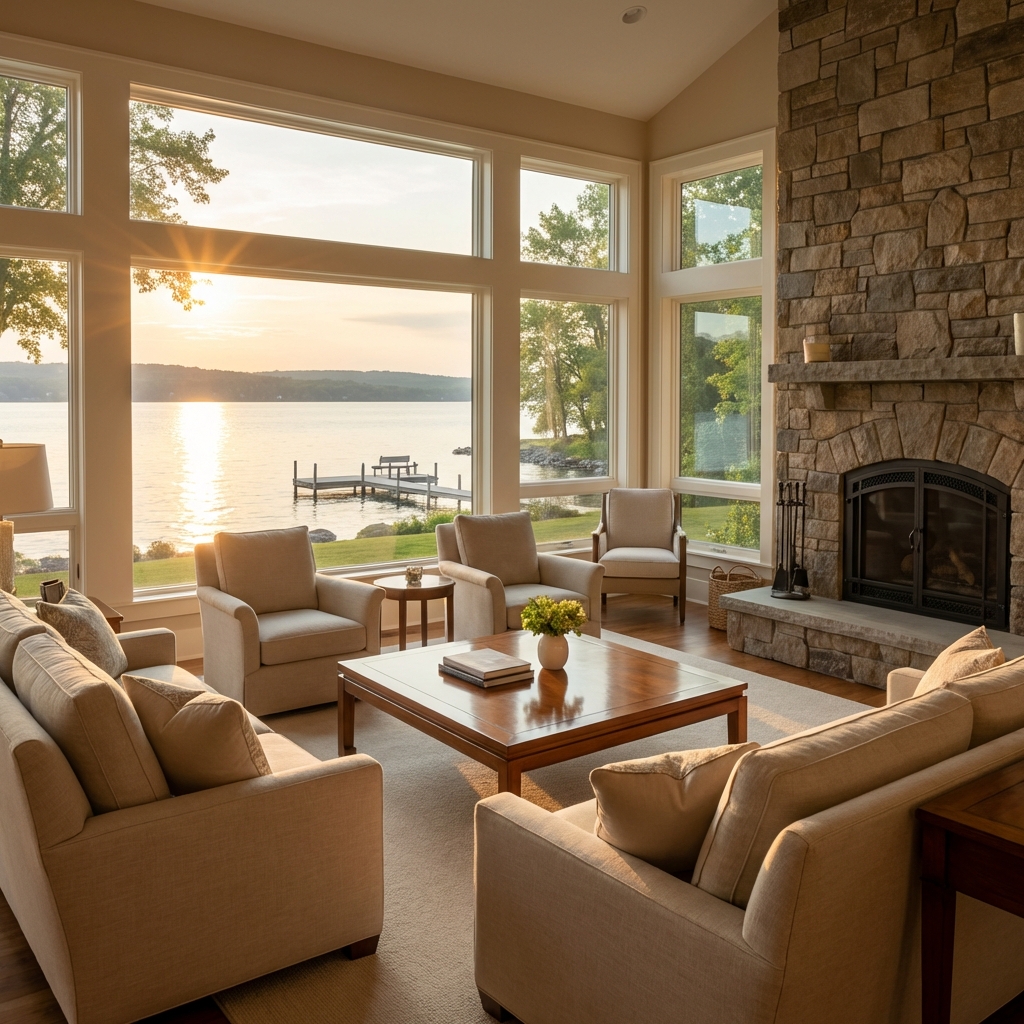
An experienced waterfront advisor will orchestrate this diligence in the correct sequence, engaging surveyors, marine contractors, environmental consultants, and municipal staff as needed. For off-market purchases, gathering this documentation discreetly—and without disrupting the seller’s routine—keeps momentum and goodwill intact.
The Role of Real Estate Expertise in Finding Hidden Gems
Finding hidden luxury homes in the Finger Lakes is part research, part relationships, and part interpretation. The interpretation piece is often underestimated. Two homes with similar square footage can diverge in value by seven figures due to frontage quality, privacy, orientation, and the functional utility of their shoreline. Recognizing that nuance—and monetizing it in negotiation—is where a specialized agent proves indispensable.
Expertise shows up in measurable ways:
- Targeted sourcing: Knowing which coves catch prevailing breezes, which stretches enjoy gentler slopes, and which communities are likely to see intergenerational transitions in the next 12–24 months.
- Clean valuation: Building pricing rationales from quiet trades, adjusting for depth at dock, dock and hoist capacity, boathouse legality, and the cost to replicate specialized construction on sloped sites.
- Deal architecture: Drafting offers that honor confidentiality, provide certainty to the seller, and structure contingencies to protect the buyer’s waterfront interests—surveys, permits, and inspection scopes that go beyond the ordinary.
- Problem solving: Resolving paper streets, rights-of-way to shared launches, encroachments on shore structures, and discrepancies between deeded and apparent boundaries.
- Communication cadence: Coordinating with attorneys, lenders, title officers, and inspectors who understand the shoreline context—without overexposing the property or undermining privacy commitments.
The Deanna Nissen Real Estate Team brings comprehensive buyer and seller representation to this process, backed by professional home valuation services and in-depth community knowledge across the lakes. As a boutique operation, the team commits senior attention to each search, focusing on quality over volume. For clients seeking off-market lakefront homes New York, that concentration of expertise shortens timelines and improves outcomes—often surfacing opportunities where others see only a quiet shoreline.
Conclusion: Maximizing Your Search for Premium Lakefront Residences
Competing successfully for New York’s finest waterfront estates requires a dual strategy: master the public market while cultivating access to the private one. The MLS provides transparency, comparables, and pace; the off-market pathway offers discretion, alignment, and a chance to secure unlisted luxury properties before they draw a crowd. Both channels reward preparation.
If you are beginning your search:
- Define the essentials: preferred lakes, frontage style, dockage needs, and primary vs. seasonal use.
- Document readiness: secure proof of funds or lender preapproval suited to waterfront valuations.
- Build your team: engage a luxury-focused, waterfront-experienced advisor who can open private doors and manage specialized due diligence.
- Stay present: monitor MLS activity while signaling sincere interest through private networks and associations.
- Move with purpose: when the right property surfaces—publicly or privately—act decisively with a well-structured, respectful offer.
The Finger Lakes and Western New York continue to reward buyers who value authenticity, stewardship, and thoughtful acquisition. With the right guidance, the hidden market becomes navigable, not mysterious. The Deanna Nissen Real Estate Team is committed to helping clients locate and secure private waterfront properties in the Finger Lakes and beyond, matching exceptional homes with those who will appreciate them most. To explore what may be available—publicly and quietly—visit deannanissen.com and begin a confidential conversation about your goals.
Frequently Asked Questions (FAQ)
What does “off-market” mean for lakefront homes in New York, and how do I access them?
Off-market properties aren’t publicly listed on the MLS or portals and are shared privately through trusted networks. Access typically requires working with a connected broker, providing proof of funds, and signing an NDA before details are released. Define target lakes, frontage needs, and budget so your representative can tap private lists and discreet owner outreach.
Do off-market lakefront listings cost more than MLS homes?
They may price at market or include a privacy premium, depending on the seller’s goals and the property’s rarity (frontage, depth, boathouse, dock rights). With fewer competing buyers, you might secure better terms or timing, but comparable sales are thinner. Rely on a valuation that blends recent MLS data with verified private trades and adjusts for frontage quality and riparian rights.
What due diligence is critical when buying a Finger Lakes waterfront property?
Confirm riparian rights, allowable dock/boathouse dimensions, shoreline setbacks, and any NYS DEC, Army Corps, or local permits for seawalls or dredging. Review floodplain maps, erosion and wake-zone impacts, road and winter access, and any lake-association or short‑term rental restrictions. Inspect septic capacity, well water quality, and shoreline stability, and obtain a current survey showing actual lake frontage and encroachments.