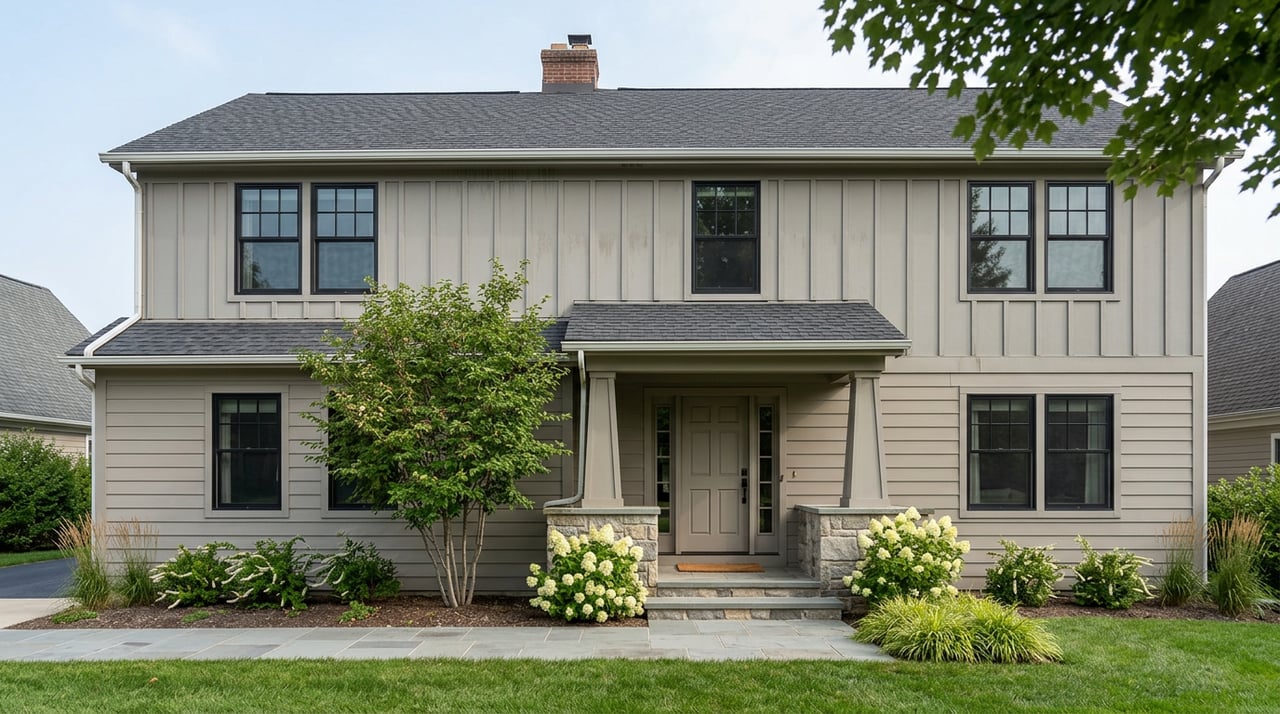
Ask two people what they pay in property taxes in Canandaigua and you may get two very different answers, even if their homes are assessed at the same value and sit less than a mile apart. Neither one is wrong. They are simply standing on opposite sides of a line that never shows up on a listing sheet, a drone photo, or a walk-through video.
That line is the boundary between the City of Canandaigua and the Town of Canandaigua, and in one small pocket near Gorham, a second line runs through the town itself: the edge of the Marcus Whitman school district. If you are comparing homes in this market with a calculator open in another tab, this is the variable that quietly resets your math.
The line the listing sheet never shows
Most buyers price a home the way portals encourage them to: purchase price, estimated rate, estimated insurance, done. Property taxes get treated as a rounding error, often pulled from a single county-wide average. That average is real, but it is also an average of two very different tax pictures, and averaging them together erases the exact information a buyer needs before writing an offer.
According to Ontario County's official 2025-2026 tax rate tables, a home inside the City of Canandaigua is taxed under one combined rate structure. A home in the surrounding Town of Canandaigua, even one on a street that feels indistinguishable from the city, is taxed under a different one entirely, because it answers to a different city or town government and, depending on exactly where it sits, potentially a different school district.
What the county's own rate sheet says
Here is what Ontario County's 2025-2026 tax rate schedule shows for the combined county, municipal, school, and library rate per $1,000 of assessed value:
| Jurisdiction | County | Municipal | School + Library | Combined rate per $1,000 |
|---|---|---|---|---|
| City of Canandaigua | 5.50 | 6.42 | 14.11 | 26.02 |
| Town of Canandaigua, Canandaigua City School District | 6.18 | 0.30 | 15.84 | 22.31 |
| Town of Canandaigua, Marcus Whitman (Gorham-Middlesex) School District | 6.18 | 0.30 | 11.37 | 17.85 |
Run those combined rates against the same $300,000 of assessed value and the gap stops being an abstraction. A home inside the City of Canandaigua carries roughly $7,807 a year. The same assessed value in the Town of Canandaigua, taxed by the Canandaigua City School District, runs closer to $6,693. That same $300,000 assessment, on the small slice of the town served by Marcus Whitman, comes in around $5,354.
That is a swing of about $2,450 a year, on paper twins.
One line on a tax roll can move your annual carrying cost by more than a car payment.
Why the county number itself is different in the city versus the town
The county rate alone looks strange at first: 5.50 in the city, 6.18 in the town. That is not the county charging different neighbors different amounts for the same services. New York's Office of the State Comptroller calculates rates by dividing each levy by that municipality's full taxable value, which depends on the municipality's own equalization rate, the percentage of true market value its assessments actually reflect. A city assessing close to 100 percent of market value and a town assessing at a different fraction will show different nominal rates for the same underlying tax burden. It is a reason to ask a specific question about a specific parcel's assessment ratio rather than compare rate numbers across municipalities and assume the higher number always means the higher bill.
The fork you can't see from the road
The bigger surprise sits inside the Town of Canandaigua itself. Most of the town falls under the Canandaigua City School District for tax purposes, even though it is not inside city limits. But the Gorham-Middlesex Central School District, known locally as Marcus Whitman, serves Rushville, Middlesex, and Gorham, and its territory reaches into the edge of the Town of Canandaigua nearest that border. A property just inside that pocket pays the Marcus Whitman school rate instead of the Canandaigua City rate, a difference of roughly 4.47 per $1,000 on its own, or about $1,340 a year on that same $300,000 assessment.
None of this has anything to do with school quality, and it is not a reason to steer a buyer toward or away from either district. It is a reason to confirm which district a specific parcel sits in before treating a listing's estimated monthly payment as final.
When the number on the assessment notice changes, and why it matters mid-contract
Ontario County's assessment roll uses a valuation date of July 1 of the prior year and a taxable status date of March 1 of the current year, meaning the assessed value that determines your bill is locked in months before most closings happen. Assessment notices typically reach mailboxes by mid-March. A buyer who goes under contract in January and closes in April may be working from an assessment that was still provisional when the offer was written, then finalized before the deed transfers. That is a detail worth asking about directly with your attorney and lender rather than assuming the number on the listing sheet is the number on next year's bill.
How to check before you fall for a listing
The rate tables above tell you what a jurisdiction charges. They do not tell you which jurisdiction a specific address sits in, and that is the piece worth confirming early rather than after an accepted offer.
- Ontario County's Real Property Tax Department maintains a public parcel lookup, the OnCor Property App, where you can search a parcel to confirm its municipality and taxing districts.
- If the property is inside the City of Canandaigua, its tax bill will not appear in the county's OnCor system. The county's own guidance notes that City of Canandaigua and City of Geneva taxpayers have to contact their city directly for tax bill information, a small but real friction point that catches buyers who assume one lookup tool covers everything.
- For anything ambiguous, the Ontario County Real Property Tax Department can be reached directly at 585-396-4382, and they can confirm both the municipality and the school district tied to a given parcel number.
For a boutique, high-touch buying process, this is exactly the kind of verification that belongs in the due diligence phase alongside financing readiness, not after the fact.
A few common questions
Does a higher county rate in the Town of Canandaigua mean town residents are paying more to the county than city residents? Not necessarily. The nominal rate differs because each municipality's assessments are equalized differently against full market value. The fairer comparison is the full-value burden, not the raw per-$1,000 number, which is exactly why a parcel-specific check matters more than a rate-sheet skim.
How do I find out which school district a specific listing falls in? Ask your agent to pull the parcel's tax history or check it directly through the county's OnCor Property App. For any address inside city limits, the City of Canandaigua's own tax office is the source of record.
Is this the only jurisdictional split that affects taxes in the Canandaigua area? It is the split most relevant to buyers comparing City of Canandaigua and Town of Canandaigua properties. Other towns around the lake carry their own municipal and school rate combinations, which is one more reason to confirm the numbers for a specific parcel rather than apply one area's math to another.
Where this leaves you
A median price on a portal was never the whole picture, and in Canandaigua, the piece most often missing is a line on a map that has nothing to do with the house itself. Buyers who ask the jurisdiction question before they fall for a kitchen are the ones who don't get an unpleasant surprise on their first tax bill.
If you are comparing homes around Canandaigua and want a straight answer on what a specific parcel's tax picture actually looks like before you write an offer, Deanna & Steve Nissen can walk through it with you, line by line, alongside the financing and closing questions that come next. Get in Touch when you're ready to start looking at this market with the full picture in front of you.